How to import cars from Japan to the UK
Importing cars from Japan to the UK can open up access to vehicles with strong specification, condition and market appeal. But a good Japanese import is not only about finding the right car. It is about understanding the process that brings that car from Japanese supply into a UK-ready position.
The vehicle needs to be sourced properly, checked before export, moved through the correct import stages, prepared for UK use and supported with clear documentation. When those stages are disconnected, importing can feel uncertain. When they are managed properly, Japanese vehicle imports become much easier to understand.
This guide explains how to import cars from Japan to the UK, what the main stages involve and why preparation, compliance and documentation matter as much as the vehicle itself.
The short version: how the process works
At a simple level, importing a car from Japan to the UK usually follows a route like this:
identify a suitable vehicle or supply route in Japan
review condition, specification and documentation
arrange export, shipping and import coordination
complete the relevant UK import declarations
handle HMRC/NOVA, duty and VAT requirements
check approval, registration and insurance requirements
prepare the vehicle for the UK market
The detail behind each stage can vary depending on the vehicle, its age, route, specification and intended use. That is why importing should not be treated as a simple purchase with shipping attached. It is a sourcing, documentation, compliance and preparation process.
Why import cars from Japan?
Japan has a strong reputation for vehicle supply, with many buyers drawn to Japanese imports for condition, specification, model choice and potential value. For UK buyers, trade partners and retail customers, Japanese imported vehicles can also offer access to vehicles that may be harder to find through normal UK stock routes.
That does not mean every vehicle is suitable for import. A strong import decision should consider the vehicle's condition, specification, mileage evidence, documentation, service history where available, parts availability, insurance considerations and likely UK preparation needs.
Fresh from Japan focuses on the route between Japanese vehicle supply and UK market readiness. That means looking beyond availability and thinking about whether a vehicle can be sourced, documented, imported, prepared and presented with confidence.
Start with the right Japanese vehicle supply
The import process starts before a vehicle leaves Japan. For many Japanese vehicle imports, the first stage is identifying suitable stock through trusted supply routes and export partners.
This is where commercial judgement matters. A car may look appealing in isolation, but it still needs to be assessed against UK demand, condition, documentation, preparation needs and likely buyer expectations. A vehicle that looks like good value at the source can become difficult if the condition is unclear, the specification is hard to support or the UK preparation work has been underestimated.
This is also where parallel imports need proper context. A parallel import is generally a genuine vehicle brought into the UK through a route outside the manufacturer's official UK retail supply chain. That can be a valid route, but it makes the quality of the process especially important.
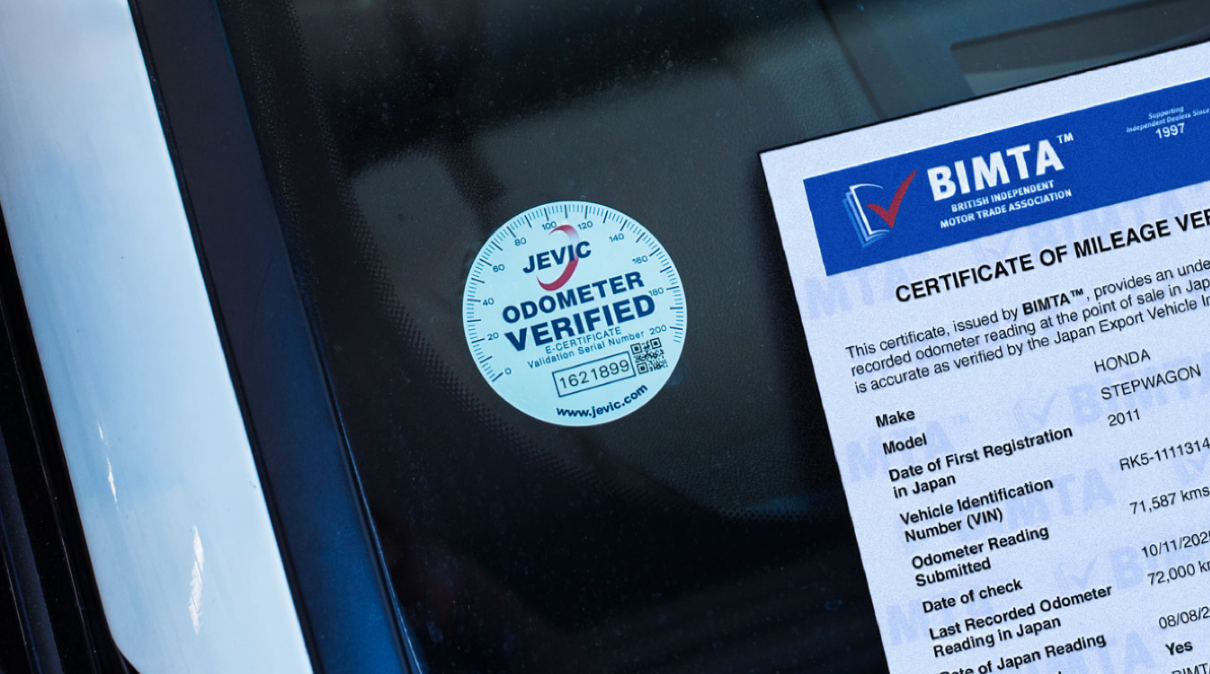
JEVIC verified odometer sticker.
Check the vehicle before export
Before a vehicle is committed to the journey, the available information should be reviewed carefully.
Depending on the route and vehicle, this may include auction grades, condition reports, mileage evidence, chassis information, export documentation, independent checks or JEVIC inspection references where applicable.
None of these should be treated as a single guarantee of quality. The aim is to build a clearer picture of the vehicle before it is imported. Bodywork, underbody condition, interior condition, mileage evidence, repair indicators, auction sheet interpretation and export certificate details can all affect whether the vehicle is a sensible UK import.
This stage matters because issues found in Japan are usually easier to understand before the vehicle is shipped than after it has already entered the UK process.
Arrange export, shipping and import coordination
Once a vehicle has been selected, the process moves into export and shipping.
This can involve export documentation, vehicle movement in Japan, shipping arrangements, customs activity and UK entry. For buyers, this is often the stage that feels least visible because several different parties may be involved.
A structured import route should make clear who is handling export documentation, how the vehicle is being shipped, what paperwork is needed before departure, what happens when the vehicle arrives in the UK and who is coordinating the import administration.
Fresh from Japan's role is built around connecting these stages rather than treating import as a set of disconnected tasks. That matters because a strong Japanese import journey depends on continuity: the decisions made at sourcing stage affect the checks, paperwork, UK preparation and eventual buyer confidence.
Understand the UK import requirements
When a vehicle is brought permanently into the UK, there are official import steps that need to be completed.
GOV.UK guidance explains that, where a vehicle is being shipped to the UK, the process can include making an import declaration, paying VAT and customs duty, telling HMRC that the vehicle has arrived, getting vehicle approval, registering and taxing the vehicle with DVLA and insuring it before it is driven on UK roads.
The exact route can depend on the vehicle, how it is imported and who is handling the import. For many imports, a shipping company, customs agent or import partner will be involved in the declaration and customs process.
This is one of the reasons documentation matters. Importing a car from Japan to the UK is not just a shipping exercise. It is an administrative and compliance process as well.

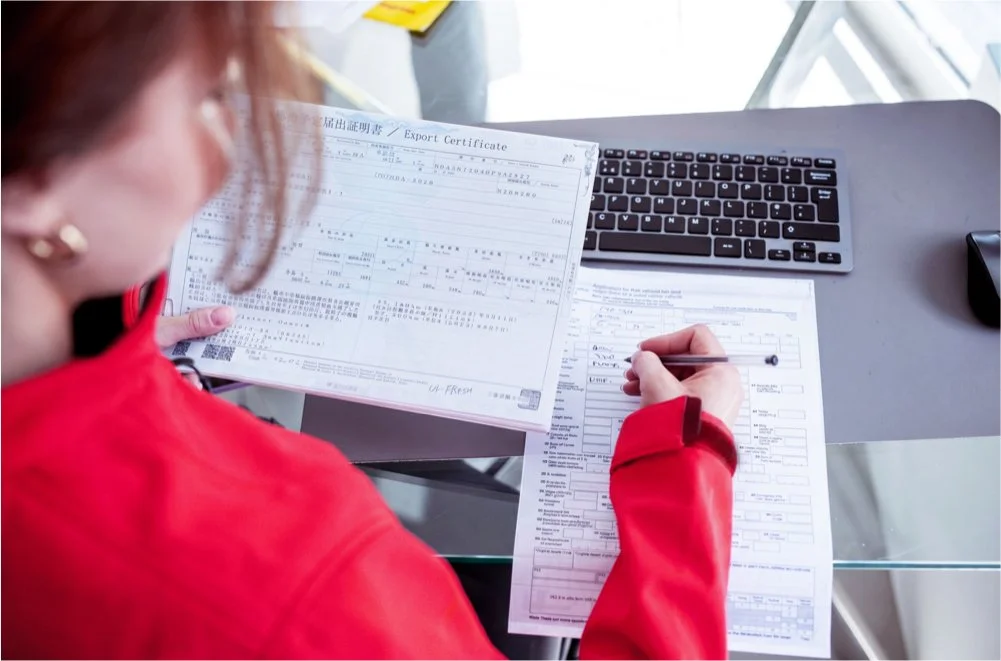
Import paperwork and compliance checks.
Handle HMRC, NOVA, duty and VAT
The UK import stage can include HMRC notification, NOVA requirements, duty and VAT considerations. GOV.UK guidance says HMRC must be told within 14 days after a vehicle is brought into the UK permanently, and the vehicle cannot be registered until that stage has been completed.
NOVA stands for Notification of Vehicle Arrivals. It is part of the process used to notify HMRC that a vehicle has arrived in the UK. The detail can vary depending on the import route, so buyers should not assume every vehicle follows an identical path.
This is also where cost planning becomes important. The total cost to import a car from Japan to the UK can depend on the vehicle purchase price, sourcing fees, export charges, shipping, customs handling, duty, VAT, UK transport, approval work, preparation, registration and insurance.
That is why "what does it cost to import a car from Japan?" is difficult to answer responsibly without knowing the exact vehicle and route. A useful answer should explain the cost areas rather than promising one fixed number.
Check approval, registration and road-use requirements
Imported vehicles may need to show that they meet relevant UK safety and environmental standards before they can be registered.
For some vehicles, Individual Vehicle Approval (IVA) may be relevant. GOV.UK explains that IVA can be used when importing a single vehicle or a very small number of vehicles, including passenger cars and goods vehicles. The correct approval route depends on the vehicle and its circumstances.
Before an imported vehicle can be used properly on UK roads, it also needs to be registered and taxed with DVLA and insured. GOV.UK guidance makes clear that a vehicle must be insured before it is driven on UK roads. It also states that you can be prosecuted for using a vehicle on a public road before completing the required import steps, except in limited cases such as driving to a pre-booked MOT or vehicle approval test.
The key point is simple: arrival in the UK is not the end of the import journey. A vehicle can be physically present in the country before it is properly prepared, registered, taxed and insured for UK use.
Prepare the vehicle for the UK market
UK preparation is where a Japanese imported vehicle becomes more than imported stock.
For retail buyers, preparation helps build confidence in the car they are considering. For trade buyers, it helps make the vehicle easier to understand, present and sell. For Japanese export partners, it helps bridge the gap between export and UK market readiness.
Preparation can include inspection, servicing, repairs, detailing, MOT-related work, registration support and presentation. Depending on the vehicle, this may also involve checks or work relating to lighting, tyres, number plates, speedometer or MPH display, underbody condition, emissions or documentation needed for registration.
This is where Fresh from Japan's connection to real UK automotive infrastructure matters. The aim is not just to move vehicles from Japan to the UK. It is to help suitable vehicles move into a clearer, better prepared and more trusted UK-ready position.
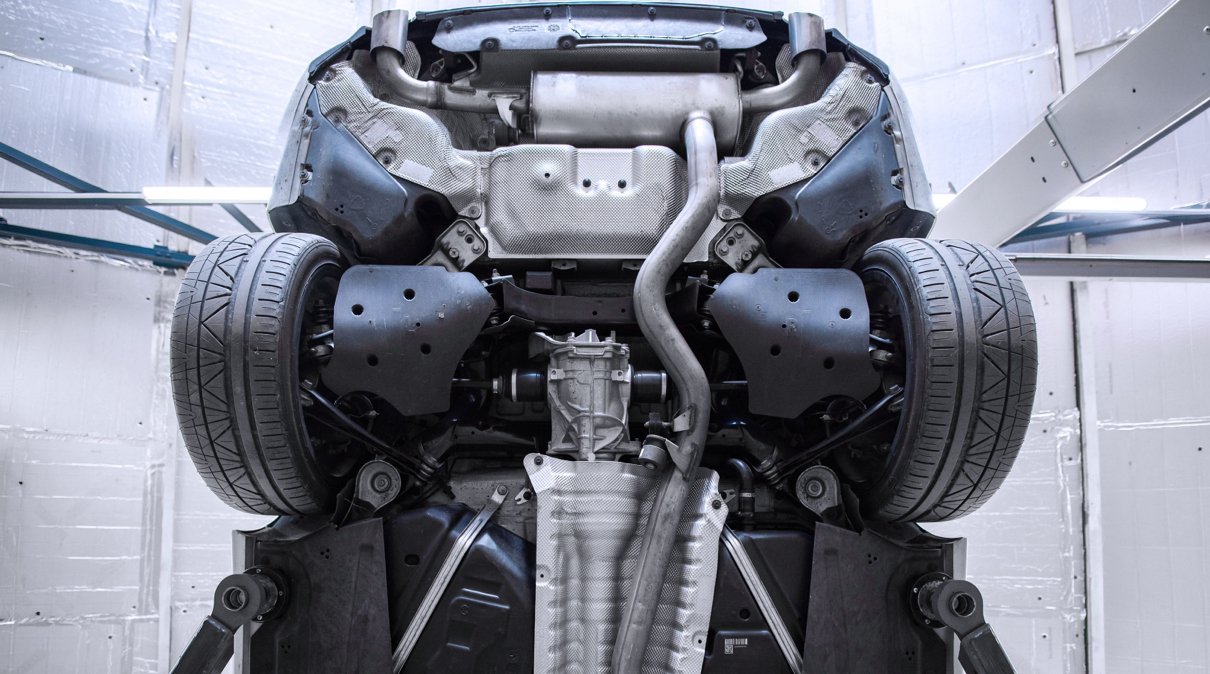
Example import with a clean vehicle underside due to superior road conditions in Japan.
Common mistakes when importing cars from Japan
Many of the risks around Japanese vehicle imports come from rushing the process or treating the import as a simple purchase.
The most common mistakes are focusing only on price, misunderstanding auction grades, not checking documentation properly, assuming every Japanese import is automatically high quality, forgetting insurance considerations, underestimating UK preparation costs or treating compliance as an afterthought.
The strongest Japanese imports are usually the ones where sourcing, checks, documentation, import coordination and UK preparation have all been considered together.
How Fresh from Japan supports the import process
Fresh from Japan was created to reduce the disconnect between Japanese vehicle supply and the UK automotive market.
The Fresh from Japan model connects trusted Japanese supply relationships, sourcing and export partner support, inspection and documentation oversight, import coordination, UK compliance awareness, preparation capability and routes into the UK trade or retail market.
For Japanese export partners, that creates a clearer route into the UK market. For UK buyers and trade partners, it creates more confidence around the journey behind the vehicle.
Instead of stopping at export, the process continues into UK readiness.
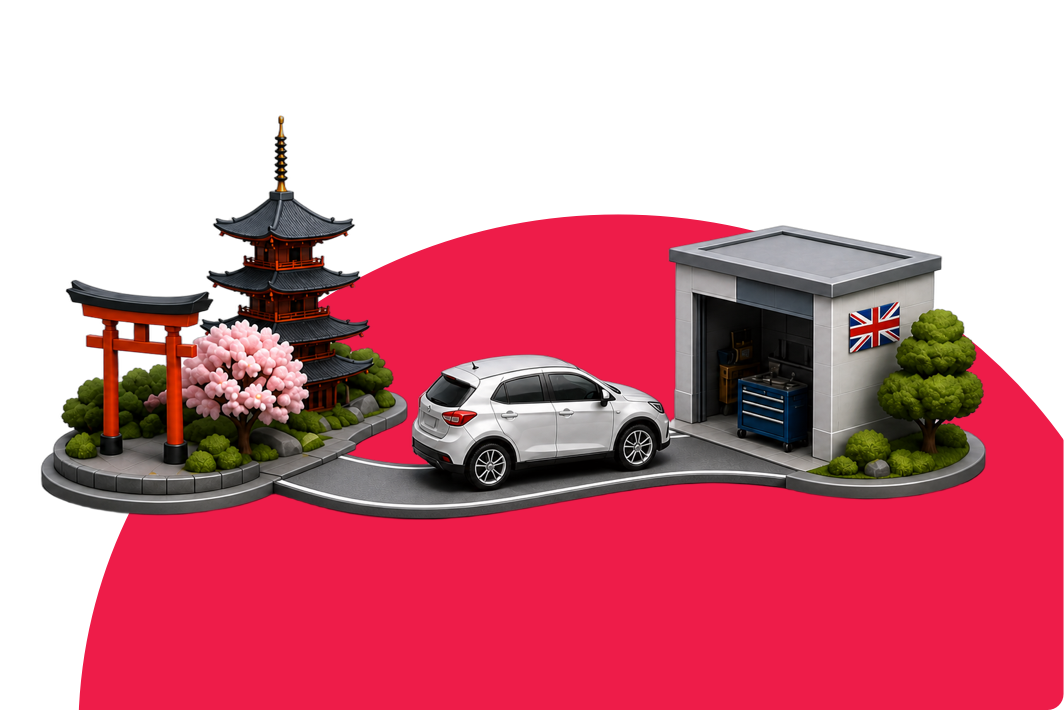
Explore our import and preparation capability
FAQs about importing cars from Japan to the UK
How long does it take to import a car from Japan to the UK?
Timelines can vary depending on sourcing, export arrangements, shipping, UK entry, approval, registration and preparation. It is better to work from the specific vehicle and route rather than rely on a generic timeframe.
How much does it cost to import a car from Japan to the UK?
The total cost depends on the vehicle, purchase route, shipping, duty, VAT, UK transport, compliance or approval work, preparation and registration. A responsible estimate needs those details.
Do Japanese imported cars need IVA?
Some imported vehicles may need Individual Vehicle Approval or another approval route before registration. The correct route depends on the vehicle and its circumstances.
What is NOVA for imported cars?
NOVA stands for Notification of Vehicle Arrivals. It is part of notifying HMRC that a vehicle has arrived in the UK. GOV.UK says HMRC must be told within 14 days after a vehicle is brought into the UK permanently.
Can you drive an imported car before it is registered?
GOV.UK warns that you can be prosecuted for using a vehicle on a public road before completing the required import steps, except in limited cases such as driving to a pre-booked MOT or approval test.
Are Japanese imported cars reliable?
Reliability depends on the model, condition, history, maintenance, checks and preparation. The important point is to understand the vehicle properly before it is imported and prepared for UK use.
Final thoughts
Importing cars from Japan to the UK can be a strong route to quality vehicles, but the process behind the car matters as much as the car itself.
The right approach starts with suitable Japanese supply, continues through proper checks and import coordination, and ends with UK preparation, registration and a clear story for the buyer.
That is where Japanese vehicle imports become easier to trust.